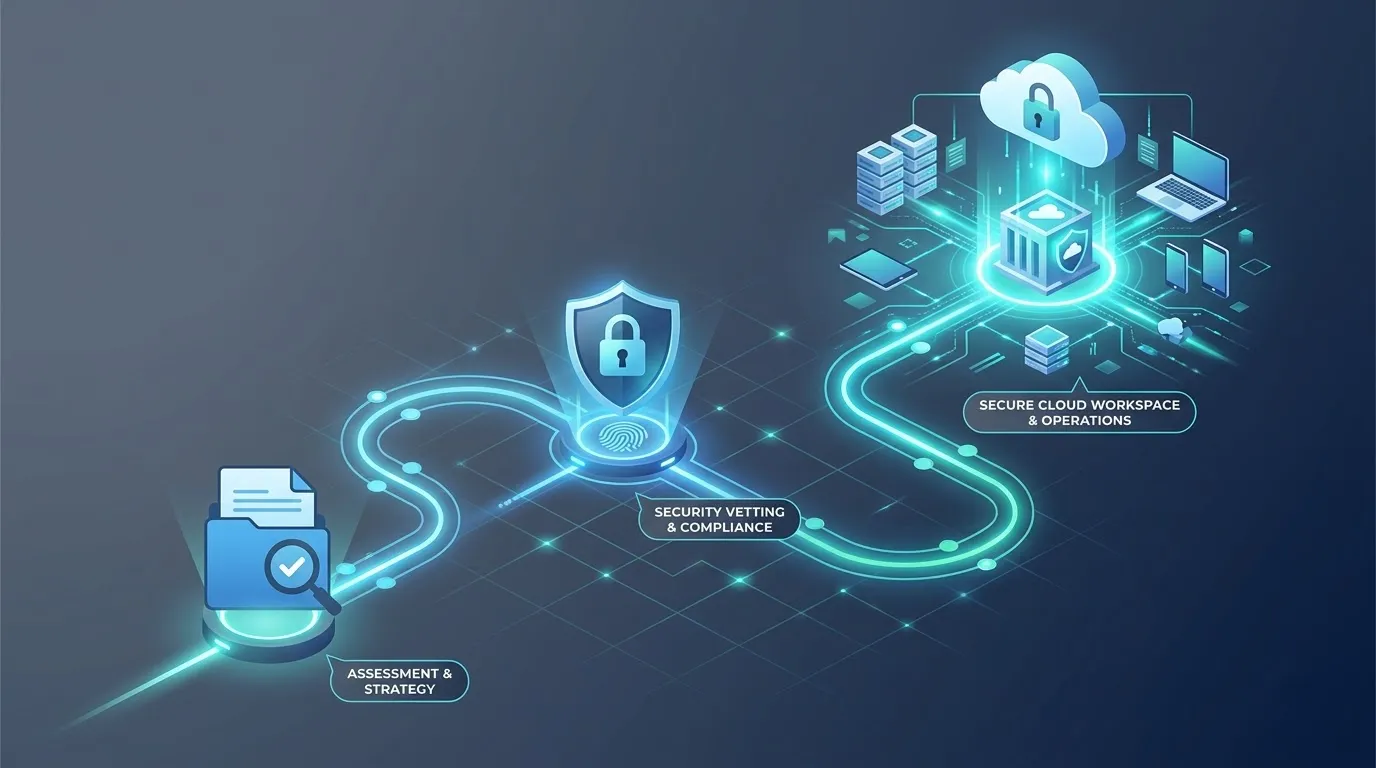
If you’ve decided IT needs to be handled differently, but “outsourcing IT” still feels like a vague idea rather than an actual plan, here’s the process broken into the steps that matter, in the order they actually happen.
Step 1: Document What You Have Right Now
Before you can evaluate any outsourcing option, you need an honest picture of your current environment: hardware and how old it is, the software you depend on, your network setup, where your data lives and how it’s backed up, and any security tools already in place. This isn’t busywork. It’s what a provider needs to give you an accurate quote, and it’s what you need to know whether a provider’s proposal actually covers your real environment or is glossing over gaps.
Step 2: Get Honest About Why You’re Considering This
Outsourcing IT solves different problems depending on what’s actually wrong. Be specific about which of these describes your situation:
- Recurring issues that never fully get fixed — the same problem keeps coming back because nobody has time to find the root cause
- An overworked internal person or team — one person covering support, security, projects, and vendor management with no backup
- Security concerns beyond your current expertise — you know you’re exposed but don’t know exactly where or how much
- Technology that isn’t keeping up with growth — what worked at 10 employees is breaking down at 40
Your answer here changes what kind of provider and pricing model actually fits. If you already have internal IT staff you want to keep, that’s a co-managed IT conversation, not a full outsourcing one.
Step 3: Understand Your Options
Two models dominate small business IT outsourcing, and they work very differently:
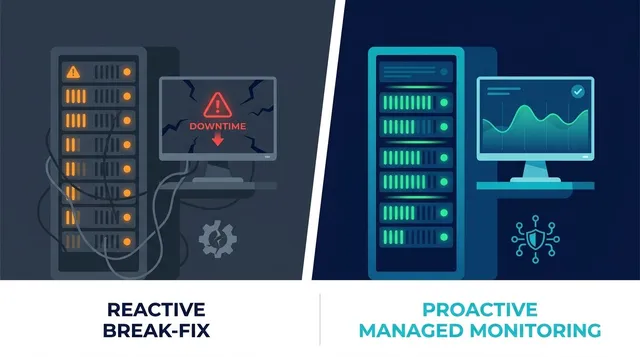
- Break-fix: pay by the hour, only when something breaks, no ongoing monitoring in between calls
- Managed IT (MSP): flat monthly fee, continuous monitoring and maintenance aimed at preventing problems before they happen
What break-fix actually costs compared to managed IT is worth reading before you assume the lower sticker price is the cheaper option. For most businesses with any real dependence on their technology, it isn’t.
Step 4: Vet Providers on Specifics, Not Marketing
Once you have a shortlist, ask direct questions and expect direct answers:
- What’s their experience with businesses your size, in your industry?
- What’s actually included in the flat rate, and what gets billed separately?
- What’s their average response time for a critical issue, in writing?
- How do they handle a security incident or outage, step by step?
- Can they scale with you, or will you outgrow them in two years?
A provider that answers in vague reassurances rather than specifics is telling you something about how they’ll handle you as a client later.
Step 5: Plan the Transition
Ask for a specific transition plan before you sign anything, not just a start date. A straightforward small-business environment typically transitions in a few weeks; multiple locations, custom software, or compliance requirements can push that to two or three months. A provider who can’t give you a concrete timeline hasn’t actually thought through your environment yet.
Step 6: Decide Whether to Start Small or Go All In
Starting with one defined piece, like helpdesk support or cybersecurity monitoring, and expanding once you’ve seen the provider perform is a reasonable way to reduce risk. Just treat it as a deliberate first phase with a plan to expand, not an open-ended half-measure. Gaps between what’s outsourced and what’s still handled ad hoc can end up being their own source of problems.
How CelereTech Fits In
CelereTech provides flat-rate outsourced IT for small and mid-sized businesses across Chicago and Northern Illinois, and we start every new client relationship with a free assessment of exactly what you have today, not a generic quote. If you already have internal IT staff, we also work in a co-managed capacity alongside them instead of replacing them.
Ready to see what outsourcing would actually look like for your business? Schedule your free IT assessment and we’ll walk through it together.