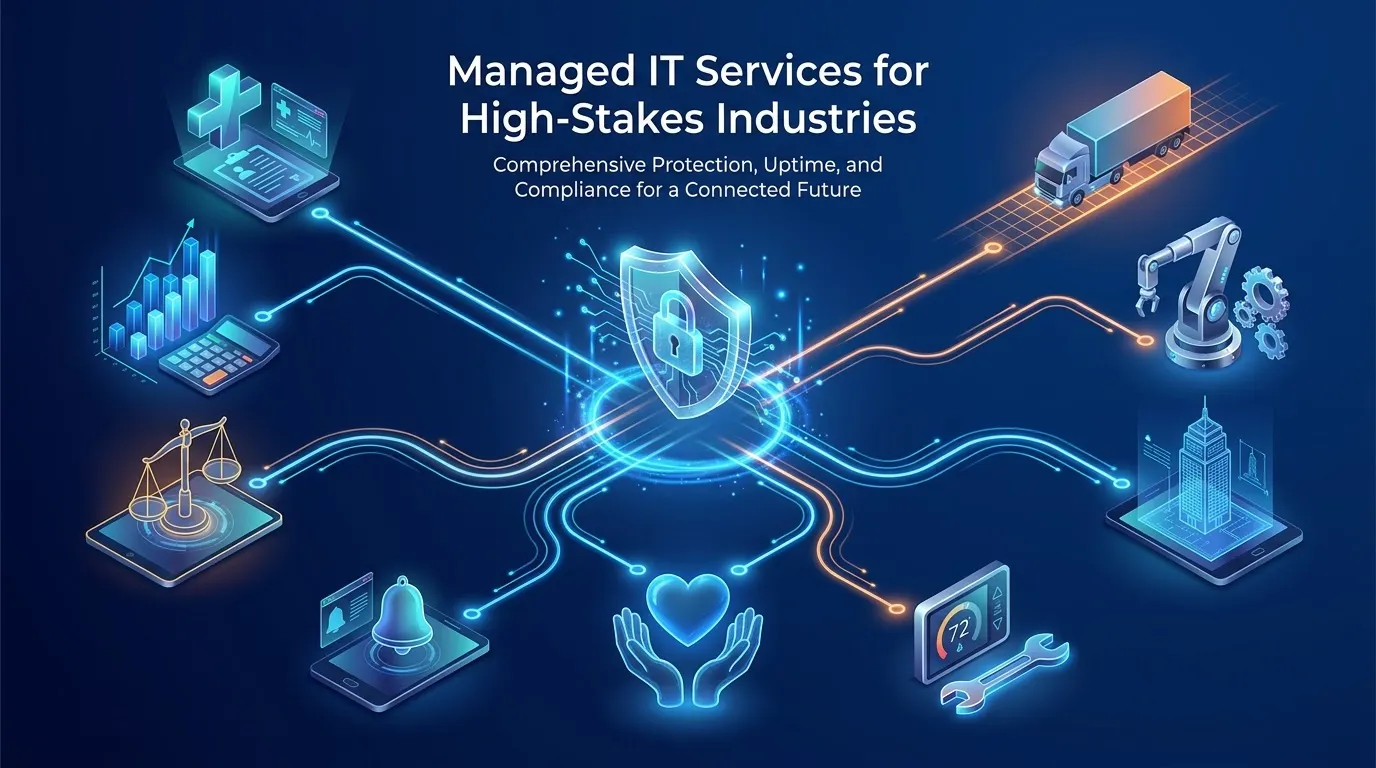
Every business depends on technology to some degree, so “which industries benefit most from managed IT” isn’t really a question of who uses computers. It’s a question of who has the most to lose when something goes wrong — a compliance failure, a system outage during peak hours, or a breach of data the business is trusted to protect. Some industries carry a meaningfully higher version of that risk than others, and that’s where managed IT delivers the clearest return.
Regulated and Compliance-Heavy Industries
Businesses operating under a specific regulatory framework face ongoing technical requirements that most internal teams don’t have the specialized bandwidth to maintain continuously, which makes this the category where managed IT’s compliance expertise pays off most directly.
- Finance — Financial institutions carry some of the highest security expectations of any industry, including full data encryption and strict access control, on top of regulatory frameworks like GLBA and SOX that create ongoing documentation and audit obligations.
- Health Care — HIPAA compliance isn’t optional, and it has to hold up under real-world conditions where systems need to perform reliably enough to keep patient care moving without interruption. See our healthcare-specific IT guide for more.
- Insurance — Client-facing systems need to be both secure and consistently responsive, since automation and secure data handling directly affect compliance, retention, and profitability in an industry built on trust.
- Government / Law Enforcement — Public-sector IT has to deliver continuous monitoring and support against a backdrop of expanding service demands and constrained budgets, a combination that rewards efficient, proactive management over reactive fixes.
- Accounting — Firms handling sensitive client financial data face rising security expectations from clients themselves, not just regulators, making a strong security posture part of the actual service offering. See our accounting-specific IT guide for more.
- Legal — Confidentiality obligations extend directly into how a firm manages its file systems, billing, case management, and CRM tools, where a security gap isn’t just an IT problem, it’s a professional liability issue.
Uptime and Operations-Critical Industries
For these industries, the primary risk isn’t a compliance penalty, it’s direct, immediate revenue loss when a system goes down during business hours.
- Hospitality — Point-of-sale, reservations, and inventory systems all need to run smoothly at once, since a network hiccup during a full house translates directly into lost revenue and frustrated guests in real time.
- Retail — Point-of-sale and inventory systems generate revenue directly in real time, and seasonal traffic spikes, holiday season especially, hit exactly when a slowdown is most expensive.
- Manufacturing — Supply chain visibility and production-line uptime both depend on a healthy network, and a manufacturing outage can halt physical production, not just slow down office work. See our manufacturing IT guide for more.
- Trucking — Dispatch and logistics coordination require real-time, secure access from any device, since a coordination failure cascades into missed pickups and delivery windows across an entire route. See our trucking and logistics IT guide for more.
- HVAC / Plumbing — Field service businesses depend on technology running continuously to manage quotes, dispatch, and scheduling, where a system outage directly delays getting a technician to a paying job.
- Veterinary — Practices need predictable technology costs and reliable systems so staff can focus on patient care rather than troubleshooting, especially during time-sensitive treatment windows.
Data-Intensive Professional Services
These firms typically lack the headcount to justify a dedicated internal IT department, but handle client-facing deadlines and specialized software that a part-time, generalist IT arrangement tends to struggle with.
- Architecture and Engineering — Design and project files, client-facing deliverables, and project deadlines all depend on infrastructure that doesn’t interrupt work in progress. See our architecture and engineering IT guide for more.
- Real Estate — A fast-moving, competitive industry where technology that keeps pace directly affects how quickly deals close and how much risk gets absorbed along the way.
- Publishing — Productivity and cost control depend heavily on uptime and smart cloud integration, particularly for businesses managing content pipelines and distribution on tight deadlines.
Mission-Driven and Resource-Constrained Organizations
- Nonprofit — Organizations running lean can rarely justify a full internal IT department, but still depend on reliable systems for donor management, grant compliance, and day-to-day operations precisely when donors, sponsors, and the community need them most. See our nonprofit IT guide for more.
Field Operations and Specialized Infrastructure
- Oil & Gas — Operations spread across field sites and existing specialized tooling benefit from network efficiency that works with infrastructure already in place, rather than requiring a disruptive full rebuild.
The Common Thread
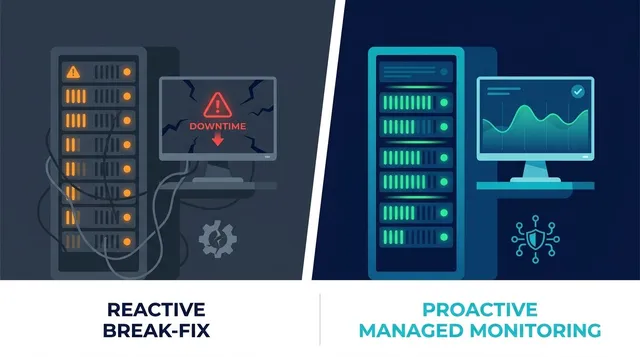
None of these industries need managed IT because their technology is more complicated in some abstract sense. They need it because the cost of getting IT wrong, a compliance violation, a halted production line, a breached client file, is high enough that proactive management pays for itself many times over compared to reactive, break-fix support.
How CelereTech Approaches Industry-Specific IT
CelereTech supports businesses across all of these industries throughout Chicago and Chicagoland, with managed IT services built around the specific compliance, uptime, and data-handling requirements each one actually carries, not a one-size-fits-all package. Get a free IT assessment and we’ll tell you exactly what your industry’s risk profile means for your technology setup.