Break-fix IT looks like the cheaper option. No monthly bill, no contract, you only pay when something actually breaks. It’s a reasonable instinct. It’s also usually wrong, and the reason isn’t obvious until you look at what break-fix actually costs once something does go wrong.
If you’ve already read about what a managed service provider does and want the real numbers behind the “which is cheaper” question, this is that breakdown.
The Real Cost of Downtime
Small businesses commonly lose well over $100 per minute during an outage once you account for lost productivity, missed sales, and staff standing around waiting for systems to come back. Two hours of downtime, which is not unusual while waiting for a break-fix technician to become available, can cost more than an entire month of managed IT fees.
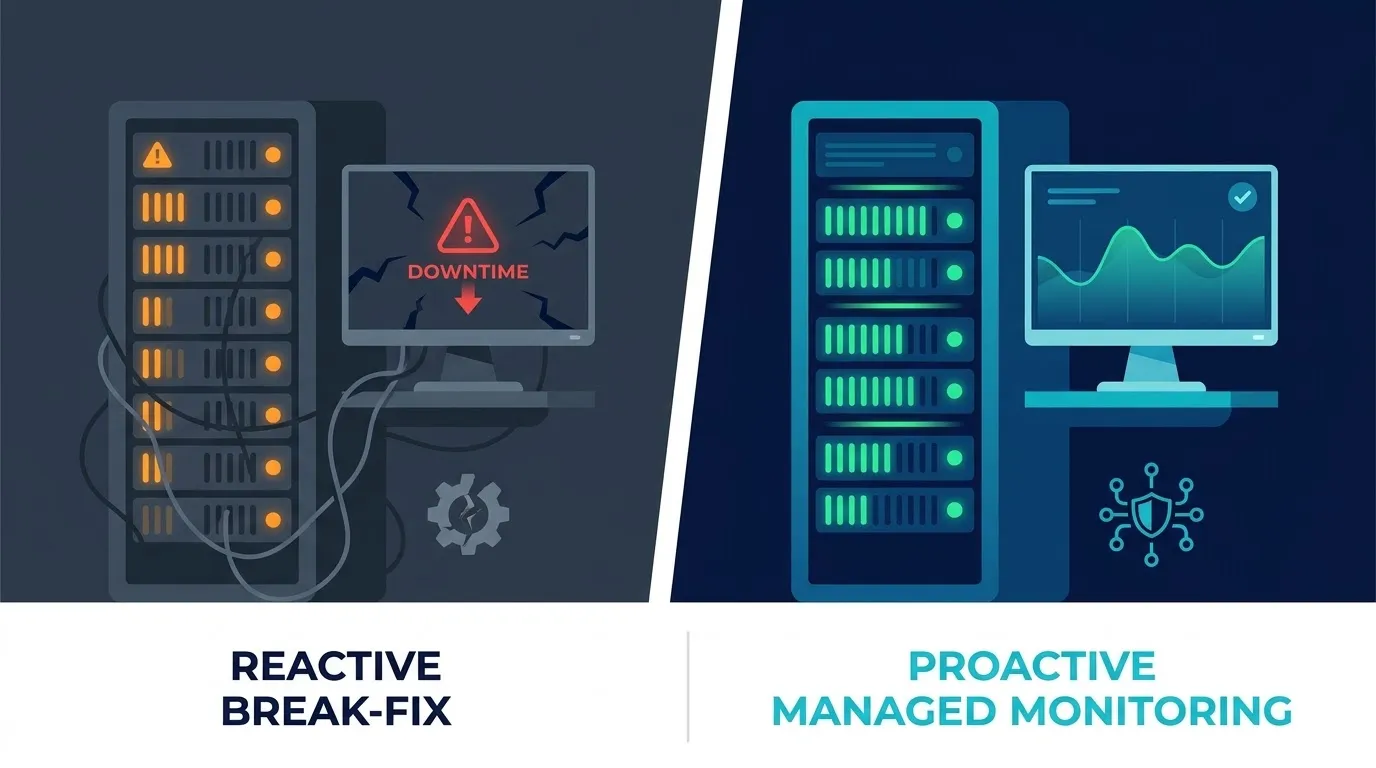
Managed IT doesn’t eliminate downtime entirely, but the whole model is built around catching problems through continuous monitoring before they turn into an outage in the first place. Break-fix, by definition, only shows up after something has already stopped working.
Emergency Rates Are Baked Into Break-Fix
With break-fix, every call is urgent, because nobody calls a break-fix vendor about something that isn’t already broken. That urgency has a price: emergency and same-day rates commonly run two to three times a technician’s normal hourly rate. What looked like a cheap, pay-as-you-go model quietly turns into some of the most expensive IT labor a business ever buys, at the exact moment it can least afford to negotiate.
The Maintenance Gap Nobody Bills For
Between break-fix visits, nothing is being watched. No monitoring, no patching, no security updates unless someone remembers to ask for them separately. That gap is where ransomware, failed backups, and slow performance quietly build up until they force another emergency call. It’s not a line item on any invoice, but it’s the reason break-fix businesses tend to have more frequent, more serious incidents than businesses on a managed plan.
When the Math Actually Flips
For a business with more than a couple of IT issues a month, managed IT tends to become the cheaper option somewhere around the 18 to 24 month mark once prevented outages, avoided emergency rates, and reduced security incidents are factored in against the flat monthly fee. Below that incident frequency, particularly for a very small operation with minimal technology needs, occasional break-fix repairs can genuinely cost less.
The honest way to figure out which side of that line your business falls on: count how many IT issues you’ve actually had in the last six months, and be honest about how much each one cost you in downtime, not just in the invoice.
Quick Decision Guide
| Your situation | Better fit |
|---|---|
| Minimal tech (basic POS, email only), rare issues | Break-fix may still make sense |
| 3+ IT incidents per month | Managed IT, almost always |
| Business depends on uptime to make money | Managed IT |
| Handling client/financial/health data | Managed IT (security gap in break-fix is the bigger risk) |
| Tight, unpredictable cash flow month to month | Managed IT (flat fee is easier to budget than a surprise emergency bill) |
How CelereTech Fits In
CelereTech provides flat-rate managed IT for small and mid-sized businesses across Chicago and Northern Illinois, built specifically to prevent the downtime and emergency-rate costs that make break-fix expensive in the first place. No surprise invoices, no per-incident billing, just one predictable monthly rate that covers monitoring, helpdesk support, and cybersecurity.
Want to see what your actual IT costs look like today versus a flat-rate plan? Schedule a free consultation and we’ll walk through the numbers with you.