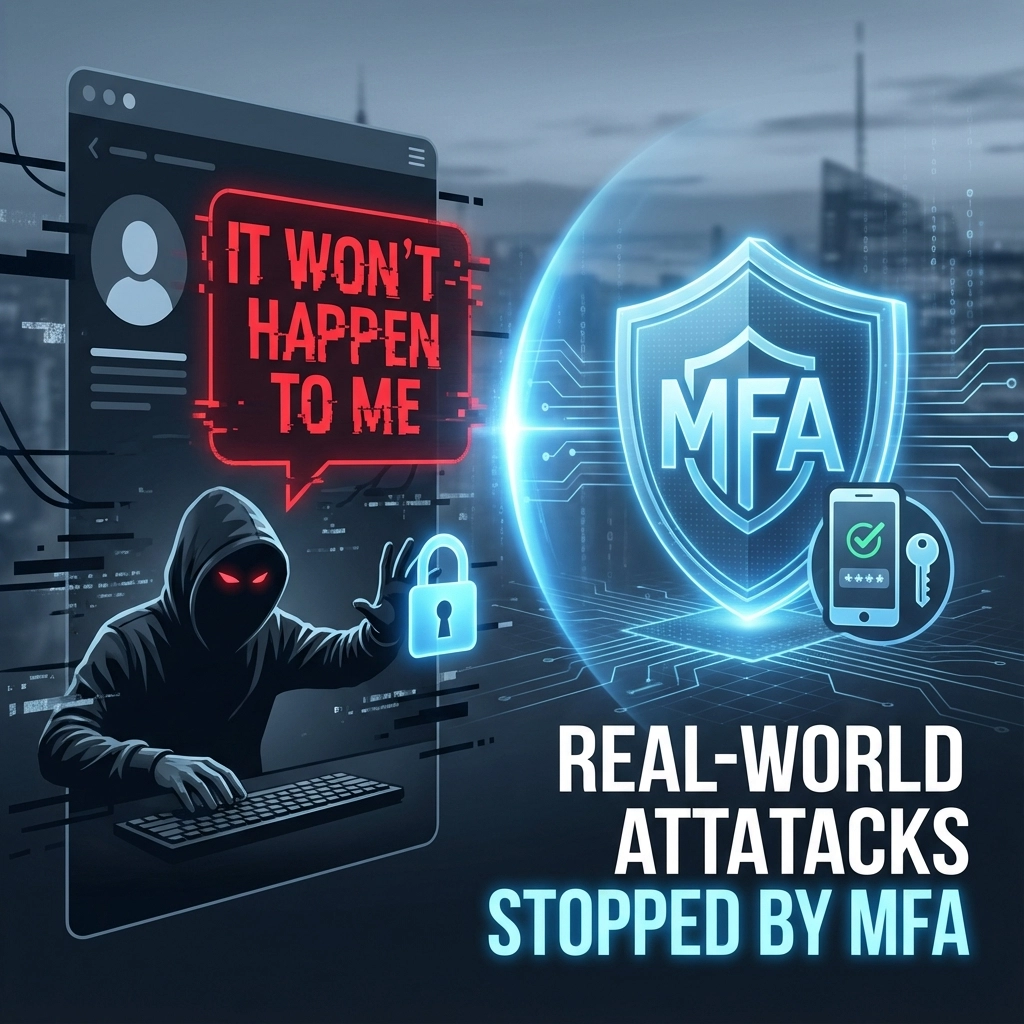
"It won't happen to me."
Those four words have preceded more security breaches than any other phrase in cybersecurity. Yet the businesses that have successfully stopped real-world attacks share one common thread: they deployed multi-factor authentication (MFA) across all their applications and paired it with password managers to ensure every account uses unique credentials.
The harsh reality? Hackers aren't just guessing passwords anymore. They're using massive databases of exposed credentials from previous breaches to launch credential stuffing attacks, where they systematically try stolen username-password combinations across hundreds of websites. When your employees reuse passwords or create slight variations of existing ones, these attacks succeed with frightening regularity.
But here's the encouraging news, MFA has stopped countless real-world attacks, even when passwords were compromised. Let's examine actual cases where businesses avoided disaster through proper authentication security.
The Regional Bank That Cut Attacks by 70%
A regional bank learned this lesson the hard way after experiencing a series of sophisticated phishing attacks that successfully captured employee login credentials. Despite security awareness training, several employees fell victim to convincing fake emails that harvested their usernames and passwords for the bank's core systems.

The aftermath could have been catastrophic. However, the bank had recently implemented app-based MFA across all business applications. Even though attackers possessed valid login credentials, they couldn't complete the authentication process without access to employees' mobile devices.
The results were dramatic, the bank achieved a 70% reduction in unauthorized access attempts within the first year of MFA deployment. What's particularly telling is that the phishing attacks didn't stop, they just became ineffective. Cybercriminals continued obtaining passwords, but MFA created an impenetrable second barrier.
How Password Managers Amplify MFA Protection
The regional bank's success story highlights a crucial point about modern authentication security. MFA works best when paired with unique passwords for every account, something that's only practical with password manager deployment.
Think about it this way: if an employee uses variations of the same password across multiple applications ("Company123!" for email, "Company124!" for CRM), a successful credential stuffing attack against one system puts all accounts at risk. Hackers use sophisticated tools to test password variations once they crack the base pattern.
Password managers solve this problem by generating truly random, unique credentials for every application. When combined with mandatory MFA, this creates a two-layer defense that stops both credential reuse attacks and authentication bypass attempts.

Healthcare's High-Stakes MFA Success
A major hospital chain faced an even more critical challenge, protecting patient health records accessible by staff working from multiple locations. The stakes couldn't be higher, with HIPAA compliance requirements and patient privacy on the line.
Their solution combined biometric authentication with mobile one-time passwords (OTPs) for off-site access to electronic health records. Medical professionals had to provide both their fingerprint and a time-sensitive code from their smartphone to access patient data remotely.
This approach successfully prevented multiple attempted breaches targeting healthcare data, which sells for premium prices on dark web marketplaces. The hospital met regulatory compliance requirements while ensuring that even if a doctor's device was lost or stolen, patient records remained secure.
The key insight? Healthcare organizations can't afford authentication failures. The combination of MFA and unique password management has become the gold standard for protecting sensitive medical information.
Enterprise-Scale Attack Prevention
Cisco faced a massive authentication challenge, securing access for over 100,000 users across 170,000 devices while managing third-party vendor relationships. Their implementation of Duo Beyond required vendors to authenticate via mobile push notifications, biometrics, or passcodes, with additional device health checks before granting application access.
This comprehensive approach prevented unauthorized vendors from accessing sensitive systems, even when vendor credentials were compromised through external breaches. The system evaluated login context including device trust, geographic location, and risk level before granting access.

Similarly, BlueSnap, a global payments company, deployed adaptive MFA across VPN and payment processing systems. The adaptive nature meant that suspicious login attempts triggered additional verification steps, successfully blocking unauthorized access attempts from compromised accounts.
The University That Stopped Online Exam Fraud
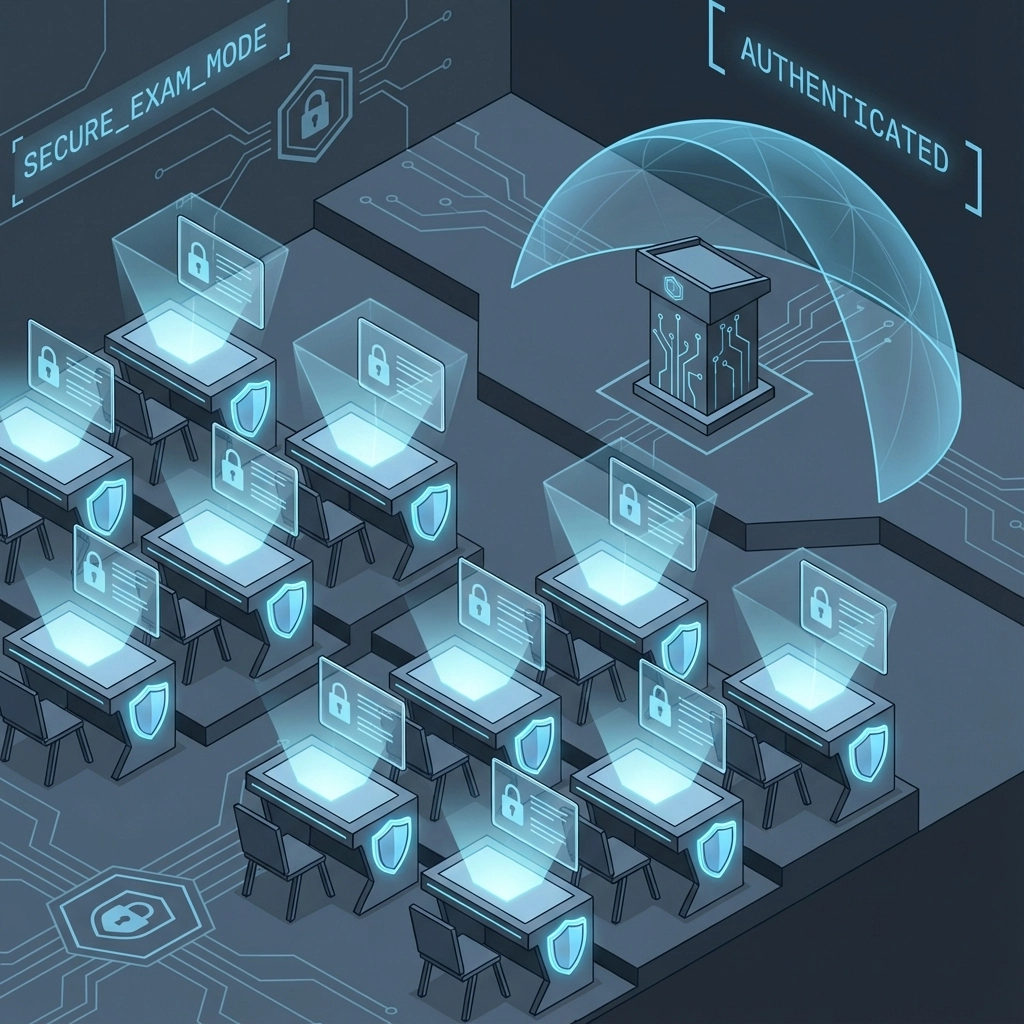
During the COVID-19 pandemic, a major university discovered vulnerabilities in their online examination systems but successfully prevented academic dishonesty through strategic MFA implementation.
Students were required to authenticate using OTPs sent through mobile apps or SMS before accessing exams, ensuring only enrolled students could participate. Faculty members used hardware tokens generating time-based one-time passcodes for additional security when accessing grading systems.
The integration significantly reduced both unauthorized access attempts and cheating incidents. Even when students shared login credentials with others, the MFA requirement prevented unauthorized exam access.
Cryptocurrency Protection in Action
TrueCode Capital faced the ultimate security test: protecting blockchain wallets containing millions in cryptocurrency assets. They implemented YubiKey-based hardware token MFA, creating a physical security requirement that remote attackers couldn't bypass.
This approach prevented multiple attempted thefts where attackers had obtained wallet passwords through various means. The hardware token requirement meant that even perfect credential theft couldn't result in asset loss without physical access to the security key.

Why Traditional Password Security Fails
These success stories share a common theme: password-only security failed, but MFA succeeded even when passwords were compromised. Here's why traditional password approaches are insufficient in today's threat landscape:
Massive Breach Databases: Cybercriminals possess billions of exposed username-password combinations from previous breaches. They systematically test these combinations across different websites and business applications.
Password Pattern Recognition: Modern hacking tools identify common password patterns and automatically generate variations. If someone uses "Winter2023!" for one account, attackers will test "Winter2024!", "Summer2023!", and hundreds of similar combinations.
Rainbow Table Attacks: Pre-computed databases of password hashes allow cybercriminals to quickly crack passwords that follow predictable patterns or use common substitutions.
Social Engineering Success: Even security-aware employees occasionally fall victim to sophisticated phishing attacks that capture credentials in real-time.
The Password Manager Advantage
Password managers address these vulnerabilities by generating truly random, unique passwords that resist pattern-based attacks. When every business application uses a completely different password, credential stuffing attacks fail because there's no pattern to exploit.
More importantly, password managers make MFA implementation practical across large organizations. Employees don't resist unique passwords when they don't have to remember them, and IT administrators can enforce strong authentication policies without creating user frustration.
Implementation That Actually Works
The organizations that successfully stopped attacks didn't just deploy MFA randomly, they implemented it strategically:
Universal Coverage: MFA protected every business application, not just email or financial systems. Attackers often target less-protected applications as entry points.
Password Manager Integration: Unique passwords for every account eliminated credential reuse vulnerabilities that could bypass MFA protection.
User-Friendly Methods: Mobile apps, push notifications, and hardware tokens provided security without excessive friction that encourages workarounds.
Adaptive Policies: Risk-based authentication required additional verification for suspicious login attempts while streamlining access for routine use.
Beyond "It Won't Happen to Me"
These real-world examples prove that MFA isn't theoretical protection, it's practical defense that stops actual attacks. The organizations that avoided breaches didn't just hope they wouldn't be targeted; they implemented authentication security that worked even when traditional defenses failed.
The combination of mandatory MFA and password manager-generated unique credentials creates overlapping protection that addresses both current and emerging attack methods. Even as cybercriminals develop new techniques, this dual-layer approach maintains effectiveness because it doesn't rely solely on keeping passwords secret.
Your business applications contain valuable data that attackers want to access. The question isn't whether you'll be targeted, it's whether you'll be protected when attacks occur.
At CelereTech, we help businesses implement comprehensive authentication security that goes beyond hoping attacks won't happen. We design MFA and password management solutions that stop real attacks while maintaining productivity and user satisfaction.
Ready to move beyond "it won't happen to me" thinking? Contact our team to discuss authentication security that works in the real world, not just in theory.