Managed IT: Expert Articles & Insights | CelereTech
CelereTech

Category

Managed IT

Isometric illustration titled 'Managed IT Services for High-Stakes Industries' showing a central security shield connected to healthcare, finance, legal, nonprofit, logistics, manufacturing, real estate, and field service icons
Managed IT

Which Industries Benefit Most From Managed IT Services?

Every business relies on technology, but healthcare, finance, legal, and manufacturing carry the highest IT risk profiles and see the most benefit from managed IT's compliance and uptime guarantees.

Illustration of the Chicago skyline with security shield icons, rising trend line charts, and connected network graphics representing managed IT pricing and value
Managed IT

How Much Does Managed IT Cost in Chicago? A Real Pricing Guide

What managed IT actually costs for a small business in Chicago, what moves the price up or down, and how to get an accurate number instead of a generic estimate.

Illustration of the IT outsourcing process moving from assessment and strategy through security vetting and compliance to a secure, managed cloud workspace
Managed IT

How to Outsource IT for Your Small Business: A Step-by-Step Guide

Outsourcing IT for the first time follows a defined process: auditing the current environment, vetting providers against measurable SLAs, and running a phased transition instead of an abrupt cutover.

Side-by-side comparison of reactive break-fix IT causing downtime versus proactive managed IT monitoring keeping systems running
Managed IT

Managed IT vs. Break-Fix: What Break-Fix Actually Costs You

Break-fix IT looks cheaper on paper since you only pay when something breaks, but downtime, emergency labor rates, and unmanaged risk usually make it the costlier option long-term.

Illustration of an internal IT employee at a desk connected to an outside managed IT provider offering 24/7 monitoring, threat detection, and data protection
Managed IT

Co-Managed IT Services: How They Benefit a Small Business With an In-House IT Team

Co-managed IT lets a business with existing internal IT staff add 24/7 monitoring, cybersecurity tooling, and after-hours coverage without hiring a second full-time employee.

CelereTech blog cover: How to Vet a Payment Processor Like You Vet an MSP
Managed IT

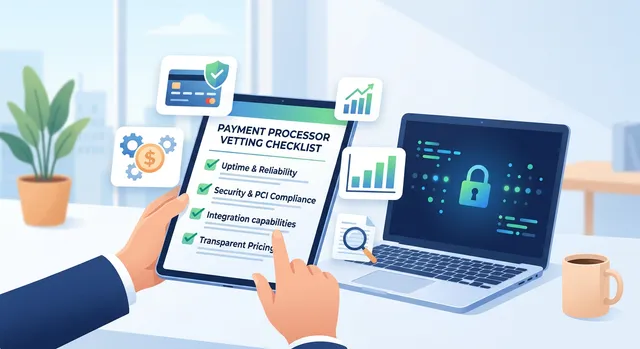
How to Vet a Payment Processor Like You Vet an MSP — A 10-Point Due-Diligence Checklist

SMBs often spend weeks vetting an MSP but sign a 3-year payment processor contract after a 20-minute pitch — a 10-point due-diligence checklist applies the same rigor to payments.

CelereTech blog cover: 12 Clear Signs Your Business Needs a Smarter IT Strategy
Managed IT

12 Clear Signs Your Business Needs a Smarter IT Strategy to Grow

Tool sprawl, rising costs, and unplanned downtime are the clearest signs a business has outgrown ad hoc IT — a unified strategy replaces reactive fixes with a documented technology roadmap.

CelereTech blog cover: What Is a Managed Service Provider
Managed IT

What Is a Managed Service Provider (MSP)? A Guide for Small Businesses

A managed service provider (MSP) is an outsourced IT department that monitors, maintains, and supports a business's technology for a flat monthly rate instead of hourly break-fix billing.

CelereTech blog cover: Reliable VoIP for Business
Managed IT

The Best VoIP Phone System for Small Business: What to Actually Look For

What actually separates the best VoIP phone systems for small business from the rest: reliability, the features worth paying for, hidden costs to watch for, and how it compares to a traditional phone line.

CelereTech blog cover: Predictable IT Costs - How Transparent Pricing Benefits Your Budget
Managed IT

Flat-Rate IT Services Explained: How Pricing Actually Works

What flat-rate IT services actually means, how it compares to per-user and per-device pricing, what it typically costs, and how to tell if a quote is really all-inclusive.

CelereTech blog cover: Endpoints Managed - Securing Your Devices with an MSP
Managed IT

Endpoints Managed: Securing Your Devices with an MSP

Only 10% of organizations monitor 100% of their endpoints, leaving blind spots attackers exploit — which is why endpoint management is one of the first things an MSP centralizes.